Sales & marketing
Manage CRM processes, campaigns, lead generation, and customer acquisition.
Core platform · organizational structure
Turn your organization structure into a working system. Build departments, teams, responsibilities, and collaboration flows that reflect how work actually moves across the business.

Build around the organization you already have
Departments are the primary pillars of your organization in Mynix. Each department can represent a real business function while maintaining its own processes, terminology, teams, and operational identity. Instead of creating an artificial org chart, Mynix connects the hierarchy to the way work is actually managed.
They provide structure for people, workflows, projects, analytics, and collaboration.
Group people by function, expertise, and real operational ownership.
Support work moving naturally between departments and teams.
Monitor department outcomes and operational health from one place.
Use your terms without forcing a generic business model onto every team.
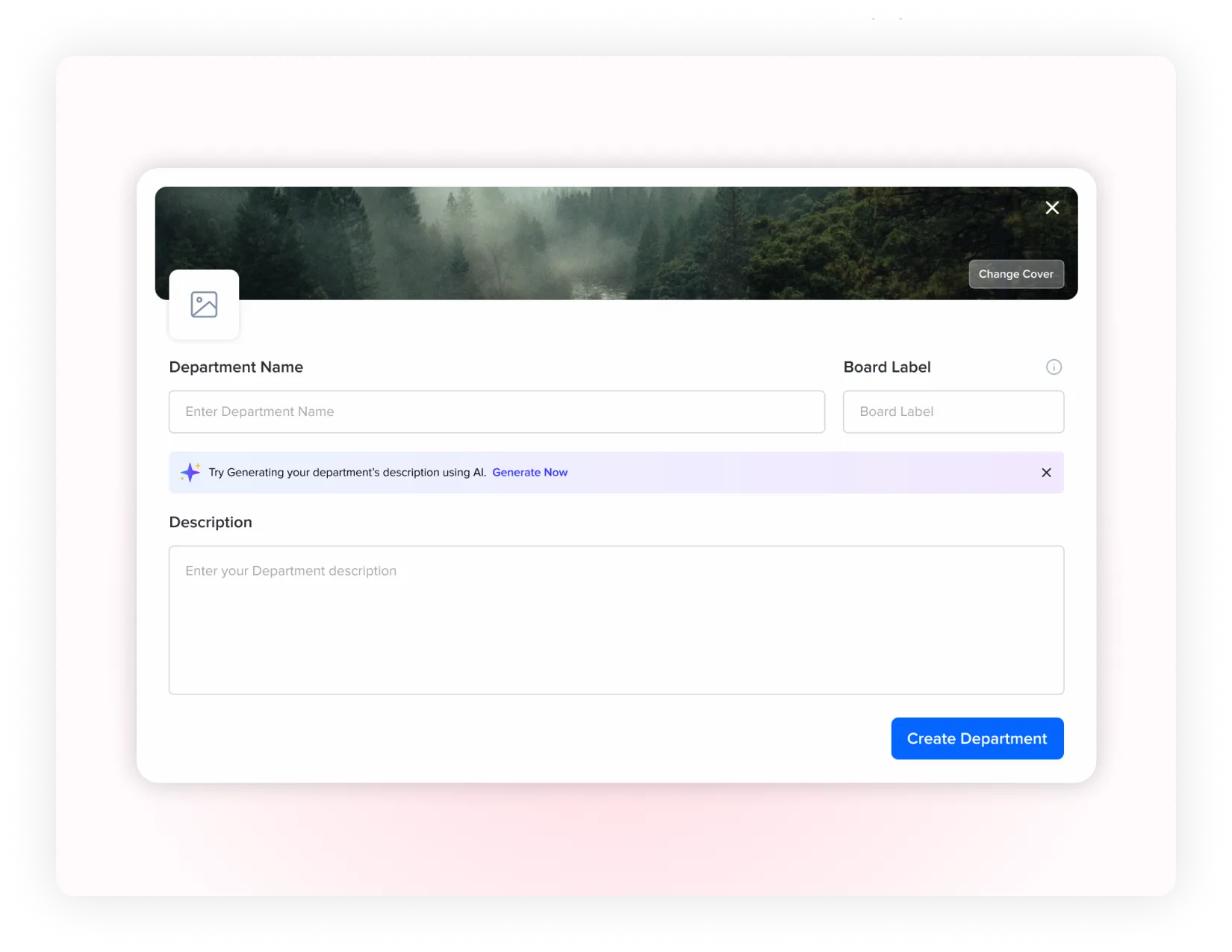
Give each department its own identity
Mynix gives each department enough flexibility to work naturally while keeping the entire organization connected and aligned.
Use department-specific colors and icons so teams are easy to recognize.
Adapt process language to match how departments already work.
Apply pre-built processes that fit each department's operational model.
Understand progress and bottlenecks at a team and department level.
Build around real business functions
Mynix can accommodate different department patterns across the business, from customer-facing functions to operational and technical teams.
Manage CRM processes, campaigns, lead generation, and customer acquisition.
Coordinate recruitment, onboarding, performance, and people operations.
Organize development, testing, deployment, and technical delivery work.
Support budgeting, billing, approvals, compliance, and operational review.
Teams handle the day-to-day work
A department can contain specialized teams defined by function, expertise, or responsibility. That gives the organization a clear structure without making every work item feel abstract or detached from actual delivery.
Built for collaboration across the org
Organizational structure should promote clarity, not create rigid walls. Mynix supports cross-team visibility and collaboration so expertise can move where it is needed.
Team structure in action
Marketing generates interest, sales qualifies leads, delivery onboards customers, and success manages the relationship.
HR recruits, IT configures access, the department trains the new joiner, and managers assign work.
Support logs a problem, engineering investigates, QA validates, and support closes the loop with the customer.
Work should flow naturally
A well-designed team hierarchy allows work to move through the business in the right sequence without losing context, ownership, or visibility. That makes the organizational structure useful during daily execution, not only during planning.
Know which department or team owns the next step.
Make accountability clear without blocking collaboration.
Maintain momentum across hand-offs and cross-team processes.

Good practices for sustainable hierarchy
When the hierarchy is shaped around how work is actually performed, it becomes a stronger operating model for the business.
Build departments around how people and teams really work together.
Begin with the core departments and expand as complexity grows.
Use clear department vocabulary your teams understand immediately.
Give the business room to add departments, teams, and responsibilities later.
Avoid common hierarchy mistakes
Let your department model match the real work and team relationships.
Allow collaboration across departments to support business needs.
Do not create layers or departments that do not reflect real responsibilities.
Names like “Department 1” create confusion and dilute accountability.
Continue the journey
Understand how independent organizations can share one secure platform foundation.
Learn more arrow_forward admin_panel_settingsDefine clear boundaries for visibility, permissions, and accountability.
Learn more arrow_forward account_treeTurn the structure into processes that move work from team to team.
Learn more arrow_forwardYour hierarchy should make execution clearer, not more complicated.