Individual ownership
Give one team member clear responsibility and accountability.
Ownership that follows the work
Put the right work with the right people. Manage ownership, responsibility, workload, and resource allocation across your workflows with flexible assignment controls built for real-world teams.
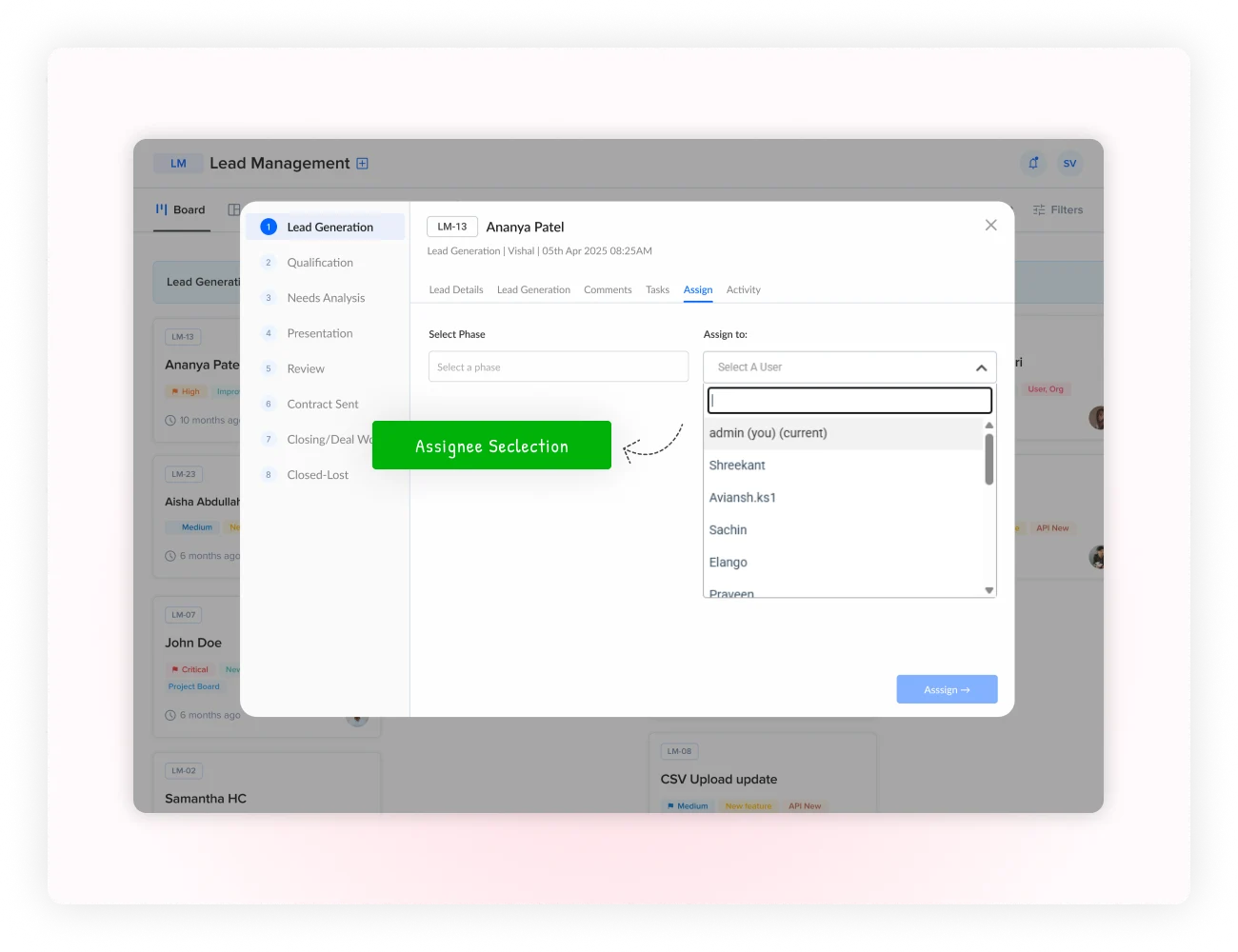
What Assignee Management does
Every work item needs a responsible person, team, role, or combination of contributors. Assignee Management gives teams the controls to decide who should own a piece of work, how responsibility should be distributed, and when assignments should change.
Give one team member clear responsibility and accountability.
Assign shared queues and collaborative processes to a team or department.
Follow a position or role holder instead of a fixed individual.
Support reviews, approvals, and work that needs several contributors.
Use rules based on skills, workload, availability, and context.
Monitor capacity and distribute incoming work more evenly.
Choose the ownership model
Different work calls for different responsibility models. Choose the approach that gives the team enough clarity without adding unnecessary rigidity.
One clearly responsible owner.
A shared queue for a team or department.
Responsibility follows an organizational role.
Multiple people contribute to one item.
Rules determine the best assignment target.
Capacity and context
Assignment decisions can consider current workload, skills, past performance, availability, schedules, and team collaboration patterns. That makes it easier to route specialized work to someone who can handle it well and has capacity to act.
A technical support request can move toward the person with the right expertise and available capacity instead of simply landing with whoever appears first in a dropdown.
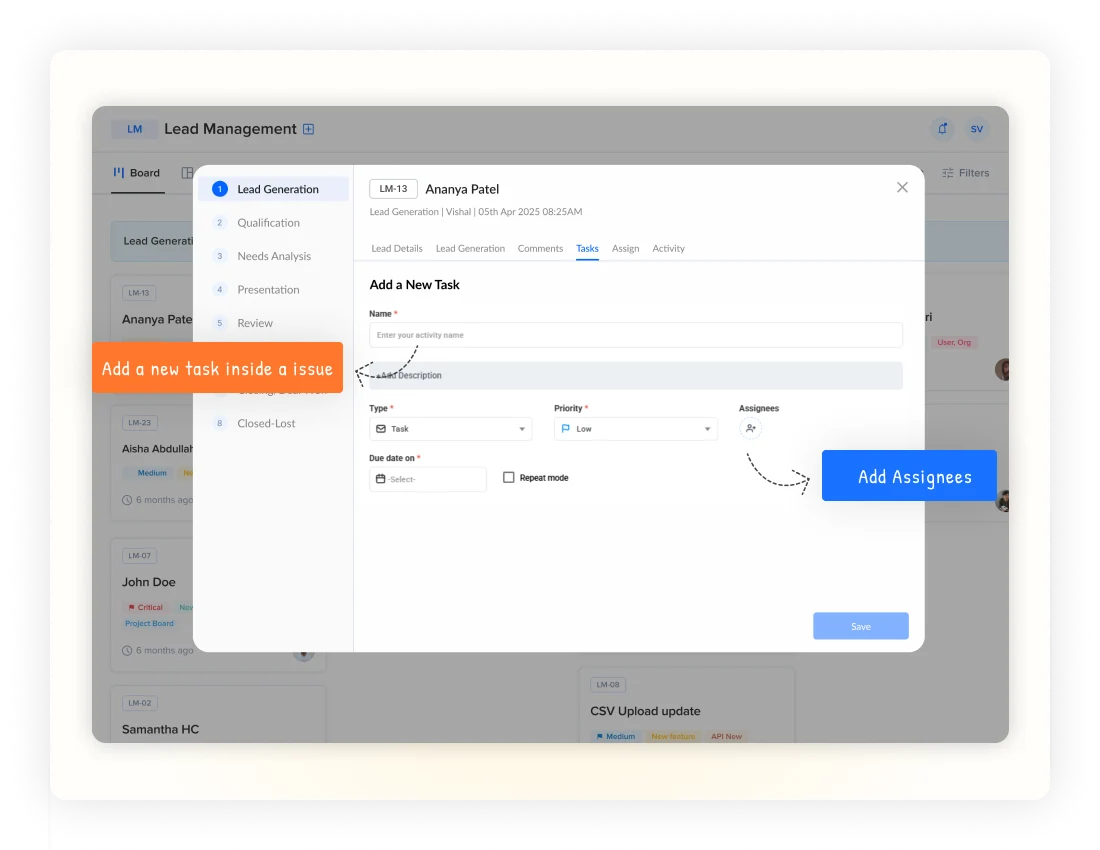
Workload management
A team can have enough overall capacity while one person carries too much active work. Assignment visibility helps managers identify overload, capacity gaps, and uneven distribution early.
Capacity is visible at the moment of assignment — not weeks later in a report.
Understand individual and team capacity usage.
Identify people carrying excessive workloads.
Track completion rates and quality signals.
Use current assignments when routing incoming work.
Rules that do the repetitive work
Combine assignment models with rules that reflect how your organization distributes work.
Match technical requests with people who have the required specialization.
Send new work toward people with room to take it on.
Consider schedules, time zones, and working periods.
Use more than one condition for consistent work distribution.
Collaborative ownership
Reviews, approvals, complex projects, and cross-functional deliverables often need a primary assignee and supporting contributors. Shared assignment keeps that distinction visible.
Add several team members for collaborative execution.
Define the lead owner while identifying supporting contributors.
Distribute participation for reviews, approvals, and complex deliverables.
Ownership can change
People become unavailable, priorities shift, workloads change, and responsibilities move between teams. Dynamic reassignment keeps ownership current while preserving visibility into how it evolved.
Transfer work to another person, team, or role target.
Maintain a record of ownership changes and decisions.
Notify relevant stakeholders when responsibility changes.
Assignment from start to finish
Assignment is more than selecting a name. It connects the right ownership model with capacity, notification, progress, and reassignment.
Individual, team, role, multiple people, or an automated rule.
Look at workload, availability, and relevant context.
Share the assignment, deadlines, and task details.
Monitor progress and reassign when circumstances change.
Assignment across teams
Use ownership models, workload signals, and assignment rules wherever multiple people contribute to a process.
Make code reviews, features, bugs, and sprint work easier to own.
Route requests according to expertise, workload, and priority.
Coordinate campaigns, content, reviews, and approval chains.
Allocate client deliverables and resources across engagements.
Distribute recruitment, onboarding, and people-process responsibilities.
Why it matters
Four outcomes that follow from clear, workload-aware ownership.
Clear ownership removes ambiguity and reduces delays.
Workload-aware assignment prevents avoidable overload.
Every work item has responsibility people can see.
Capacity information supports stronger planning decisions.
Related features
Assignee Management works best alongside the tools that define tasks, accountability, and collaboration.
Assign work manually, distribute it intelligently, collaborate across responsibilities, and adapt ownership as the work changes.